








Super Bowl Halftime Divides Fans: Bad Bunny’s Choice Sparks Debate & Latin Music Milestone Claims
 January 18, 2026
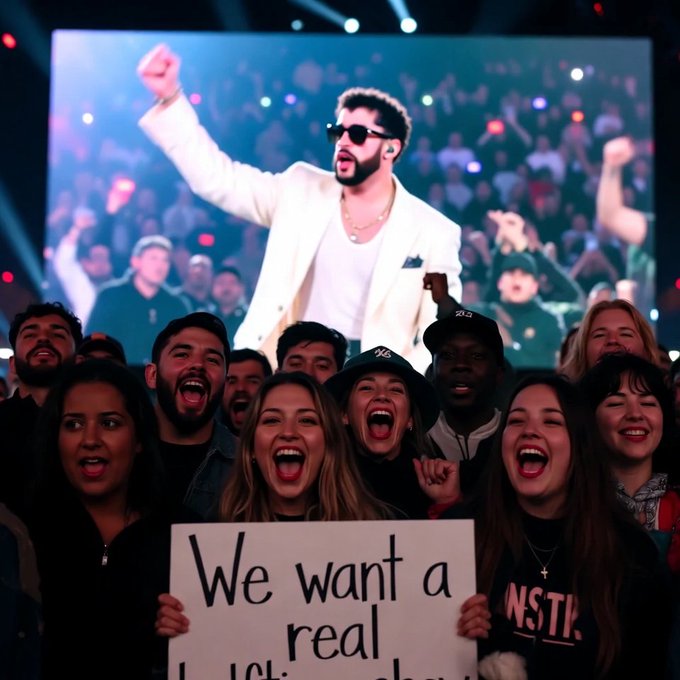
Super Bowl Halftime Explodes: Bad Bunny Performance Sparks Fiery Fan Debate and Unprecedented Latin Music Milestone Claims
By koalafriend
The biggest stage in American sports just got a whole lot more controversial. The Super Bowl Halftime Show, an annual spectacle designed to unite millions, has once again become a hotbed of discussion, this time thanks to none other than the “King of Latin Trap” himself, Bad Bunny. His highly anticipated performance has ignited a fierce debate across social media and living rooms nationwide, leaving fans sharply divided between outrage and celebration. Was it a divisive misstep or a monumental leap for global music? Let’s dive into the drama.
The Performance That Rocked the Internet
When Bad Bunny took the Super Bowl Halftime stage, the world was watching. Known for his groundbreaking style, genre-bending hits, and unwavering authenticity, the Puerto Rican superstar delivered a performance packed with his signature flair. From electrifying visuals to his unmistakable vocal delivery, it was undeniably a Bad Bunny show. However, it was also a performance predominantly in Spanish, interwoven with subtle nods to his political and social viewpoints that have long been a part of his artistic identity.
And that, dear readers, is where the internet truly broke.
Fan Fury: The Call for Alternatives
Almost immediately after the final note faded, the commentary began to pour in. For a significant segment of the audience, particularly some long-time Super Bowl viewers, Bad Bunny’s choice to lean heavily into his Spanish-language catalog felt out of step with what they considered the show’s tradition. “Where was the English music for a US Super Bowl?” became a trending question online, with many expressing feelings of disconnect.
“I just wanted to hear some familiar songs I could sing along to,” one fan tweeted, echoing a sentiment that rapidly gained traction. Others voiced concerns that the Super Bowl Halftime Show should cater to the broadest possible English-speaking audience, arguing that a performance so deeply rooted in a non-English language might exclude a considerable portion of viewers.
Beyond the language, Bad Bunny’s known political stances and subtle messages within his act also drew ire from some corners. While the specifics were often nuanced, some viewers felt that the biggest sporting event in the nation was not the appropriate platform for perceived political statements, even if implicitly made through artistic expression. “Keep politics out of the Super Bowl,” was a common refrain, reigniting a perennial debate about the intersection of entertainment, sports, and social commentary. These critiques led to calls for alternative performers, with fans suggesting a wide array of artists they believed would offer a more “universally appealing” experience. The pressure for the NFL to deliver a consensus-pleasing show seems to mount with every passing year.
A Milestone Moment: Shakira and Young Miko Lead the Defense
But for every critical tweet, there was an equally passionate defense, championing Bad Bunny’s performance as an absolute triumph and a pivotal moment for Latin music on the global stage. Leading the charge of support were fellow Latin music titans and rising stars, unequivocally celebrating the “El Conejo Malo’s” bold choice.
Super Bowl Halftime veteran Shakira, who herself delivered an iconic, Latin-infused performance in the past, quickly chimed in with her unwavering support. While the details of her exact statements vary, her overall stance has consistently celebrated the growing visibility of Latin artists and culture in mainstream American entertainment. Sources close to the Colombian superstar indicated her profound admiration for Bad Bunny’s courage in staying true to his roots and language, emphasizing that music transcends linguistic barriers. For Shakira, this was not just a performance, but a powerful statement about representation and cultural pride.
Rising star Young Miko, another influential voice in the Latin music scene, also vociferously defended Bad Bunny’s decision. She hailed the performance as a monumental step forward, particularly for Puerto Rican artists and the broader Latin music community. For Young Miko and many others, seeing Bad Bunny command the Super Bowl stage in his native tongue was a deeply moving and validating experience, proving that authenticity and cultural identity need not be sacrificed for global appeal. She highlighted the sheer impact of an artist performing Spanish-language hits to an audience of hundreds of millions, underscoring it as a clear sign of changing tides in the music industry.
Supporters argued that this performance was a long overdue recognition of Latin music’s massive global influence and its undeniable presence in the United States. They pointed to the skyrocketing streaming numbers, sold-out tours, and chart-topping success of Latin artists across genres, asserting that the Super Bowl stage was simply reflecting a reality already embraced by millions worldwide. For them, Bad Bunny didn’t just perform; he broke down barriers, opened doors, and solidified Latin music’s rightful place at the pinnacle of entertainment. It was a cultural representation victory, pure and simple.
Beyond the Buzz: The Enduring Impact of a Polarizing Performance
The debate surrounding Bad Bunny’s Super Bowl Halftime performance goes far beyond mere musical preference. It touches on deeper questions about cultural identity, linguistic diversity, and the evolving definition of “mainstream” in America. In an increasingly globalized world, where music travels effortlessly across borders, is it fair to expect a singular, English-only experience from such a monumental event? Or should the Super Bowl Halftime Show reflect the rich tapestry of cultures that make up the global audience and indeed, the very fabric of the United States?
Whether you loved it or you felt it missed the mark, one thing is undeniably clear: Bad Bunny’s Super Bowl Halftime performance will be remembered. It sparked conversation, challenged expectations, and forced a critical examination of what we truly desire from our biggest entertainment spectacles. Was it a touchdown or a fumble? Perhaps it was both, a complex play that divided fans but undeniably pushed the boundaries of what is possible on the world’s most watched stage. And in the ever-unpredictable world of celebrity and pop culture, isn’t that what we secretly crave? The drama continues.