








Escaping Typecasting: How Johnny Depp Killed Off ’21 Jump Street’ to Find His Edge.
 January 16, 2026
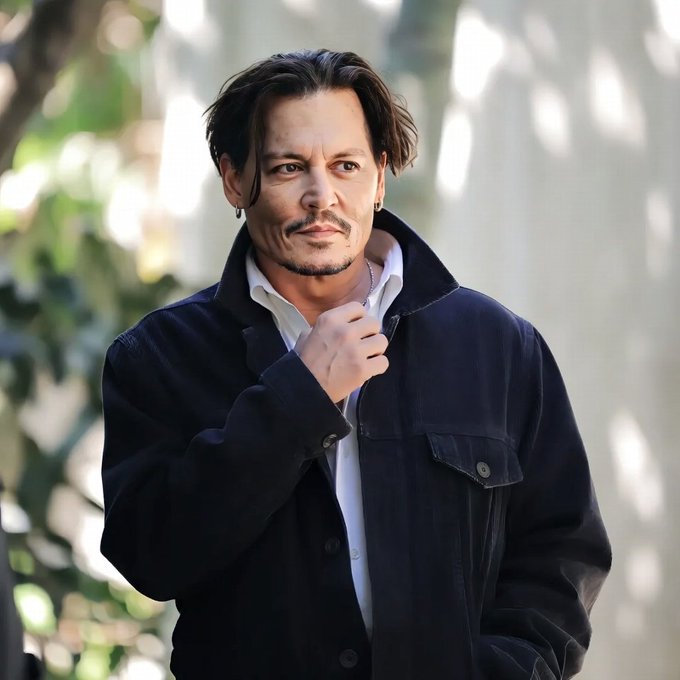
Beyond Officer Hanson The Shocking True Tale of How Johnny Depp Sabotaged 21 Jump Street to Become a Hollywood Icon
Hold on to your hats, entertainment fans, because we are about to dive deep into one of Hollywood’s most audacious career moves. Before he was the swashbuckling Captain Jack Sparrow, the brooding Edward Scissorhands, or the enigmatic Willy Wonka, Johnny Depp was simply Officer Tom Hanson, the clean-cut heartthrob of the late 1980s phenomenon, 21 Jump Street. But beneath that perfectly coiffed hair and innocent gaze lurked a rebel with a plan, a genius strategy to escape the very success that threatened to trap him forever. Get ready to uncover how Depp deliberately orchestrated his own character’s demise to forge the path to his legendary, edgy career.
The Rise of a Teen Idol A Double-Edged Sword
Picture this: It is 1987. Teen television is booming. A fresh-faced Johnny Depp steps onto the scene as a baby-faced police officer infiltrating high schools. 21 Jump Street was an instant smash hit. Depp became a bona fide teen idol overnight. Girls screamed his name. Posters adorned millions of bedroom walls. He was the quintessential clean-cut hero, the good guy, the face of youthful law enforcement. For many young actors, this would be the dream. A steady paycheck, immense fame, a defined public image. But for Johnny Depp, it was quickly becoming a gilded cage.
Sources close to the star at the time often spoke of Depp’s growing restlessness. He was grateful for the opportunity, absolutely. 21 Jump Street launched his career into the stratosphere. However, the creative restrictions and the relentless typecasting that came with playing Officer Tom Hanson began to chafe. He felt stifled. He craved complex characters, darker narratives, roles that would challenge his acting chops beyond chasing down high school drug dealers. He wanted to be an artist, not just a pin-up. This was his early career challenge, a pivotal moment where he had to make a drastic choice.
The Master Plan Unfolds Sabotaging the Clean-Cut Image
So, what does a rising star do when he feels trapped by his own success You guys, Johnny Depp did not just quietly express his desire to move on. Oh no. This is where the story gets really juicy. He began a deliberate, calculated campaign to make himself, or at least his character, unappealing to the very producers who adored him. He knew that simply walking away might brand him as difficult or ungrateful, potentially jeopardizing future film prospects. His approach was far more strategic. He decided to force their hand.
Reports from the era suggest a subtle yet impactful transformation. Depp reportedly started showing up for promotional events and even some filming sessions with an increasingly unkempt, rebellious appearance. Think less Officer Hanson, more burgeoning rock star. His clean-cut image, the very thing that made him a marketing dream for the network, began to fray. He experimented with his hair, cultivated a moodier demeanor, and generally pushed the boundaries of what was acceptable for their golden boy. It was a silent rebellion, a visual protest against the wholesome persona he was forced to embody.
But the sabotage went deeper than just aesthetics. It is widely rumored that Depp became increasingly vocal about his character’s storylines, pushing for Tom Hanson to be written into more controversial, less heroic situations. He was reportedly difficult to work with when it came to maintaining the squeaky-clean image that the network so desperately clung to. He was essentially telling them, without explicitly saying it, “I am not your teen idol anymore.” He made it clear, through his actions and increasingly unpredictable behavior on set, that he was ready for a new chapter.
The Reckoning And The Escape
This deliberate campaign of image-sabotage and creative restlessness began to pay off. Producers, faced with a star who was no longer happy to play by their rules and whose public image was veering off-brand, eventually relented. The network faced a dilemma: keep a disgruntled, rebellious Depp who was undermining their carefully crafted teen-friendly show, or find a way to gracefully let him go. The writing was on the wall. They decided to kill off his character. This was the ultimate victory for Depp, a daring move that paid off spectacularly. His character was written out of 21 Jump Street, freeing him from the very role that made him famous.
This was not just about leaving a TV show; it was about reclaiming his artistic identity. The moment he escaped the shadow of Officer Tom Hanson, Depp immediately pivoted towards the edgier, more eccentric roles that would define his legendary career.
Finding His Edge The Icon is Born
Almost immediately after his 21 Jump Street departure, Johnny Depp made a seismic shift in his career trajectory. His first major film role post-Hanson was in Tim Burton’s Edward Scissorhands in 1990. Talk about a complete 180! From a clean-shaven cop to a misunderstood, tragic figure with blades for hands. This role cemented his collaboration with Burton, a partnership that would gift us countless iconic characters including Sweeney Todd, Willy Wonka, and the Mad Hatter.
He actively sought out roles that challenged perceptions and embraced the unconventional. He embraced the dark, the quirky, the beautifully strange. From What’s Eating Gilbert Grape to Donnie Brasco to Fear and Loathing in Las Vegas, Depp consistently chose characters that were far removed from any hint of his teen idol past. This was a man determined to prove his range, his depth, and his commitment to the craft of acting, free from the shackles of typecasting.
The Enduring Legacy A Lesson in Career Reinvention
Johnny Depp’s strategic escape from 21 Jump Street is more than just Hollywood gossip; it is a masterclass in career reinvention. It shows a young actor, incredibly famous, incredibly successful, but utterly miserable with his artistic direction, taking a huge gamble on himself. He risked alienating an entire fanbase and network executives, all to pursue his true passion. And it paid off in spades.
Today, Johnny Depp remains one of the most recognizable and talked-about stars in the world. His early career challenges, particularly that battle against typecasting from 21 Jump Street, shaped the fearless actor we know today. It reminds us that sometimes, to find your true edge, you have to be willing to kill off the comfortable, even if it means sabotaging the very thing that made you famous. What an absolutely wild, inspiring journey.